
Finding the best heel lifts for leg length discrepancy starts with measurement, not shopping. A good lift should match your actual discrepancy, fit securely inside the shoe, preserve heel stability, and provide the right balance of firmness and cushioning.
Best Heel Lifts for Leg Length Discrepancy by Adjustment and Comfort
For a small structural leg length discrepancy, an internal heel lift for short leg correction can be practical. A structural discrepancy means the femur or tibia is physically shorter, while a functional leg length discrepancy can come from muscle tightness, scoliosis, pronation, or pelvic alignment. Those conditions should not automatically receive the same treatment.
Best Heel Lifts for Leg Length Discrepancy When Precise Adjustment Matters
The Clearly Adjustable Heel Lift is particularly useful when fine adjustment is the priority. Its removable rigid vinyl layers provide 1 mm adjustment from 1 to 12 mm. Rigid vinyl maintains consistent heel lift height, although the product is not designed as a cushioning device.
That precision makes this style useful when you and your clinician are gradually dialing in lift correction. An adjustable lift allows gradual height changes, and gradual adjustment may improve accommodation when your body has adapted to an uneven gait.
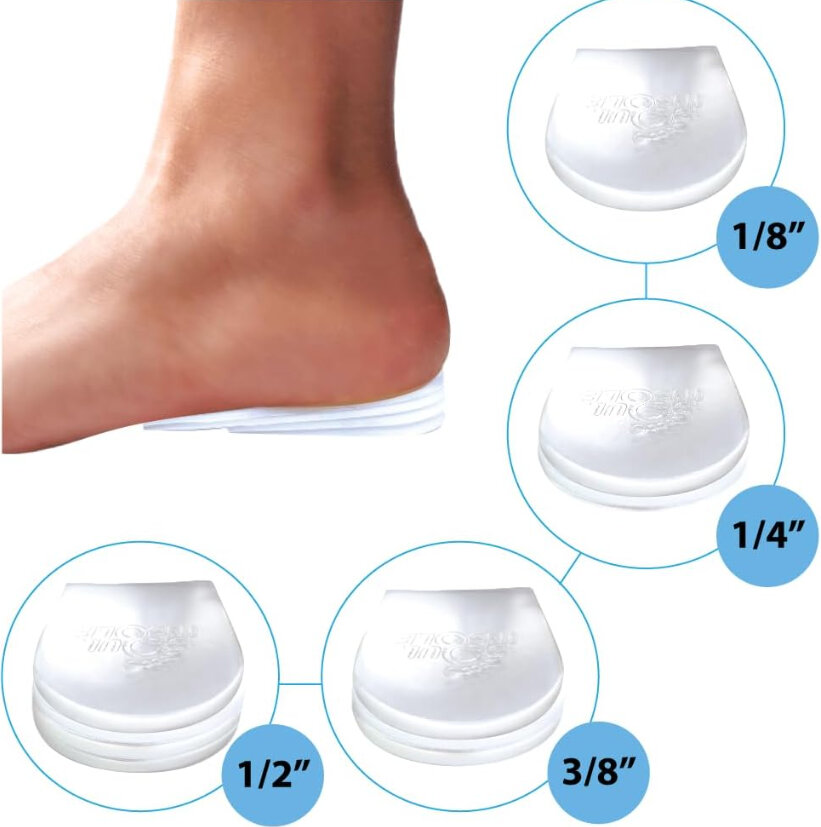
PowerStep Adjustable Heel Lift uses three removable semi-firm sponge layers. You can configure it at 1/8, 1/4, or 3/8 inch, while the sponge material provides cushioning and shock absorption. Its tapered heel wedge creates a smoother transition toward the midfoot.
Best Heel Lifts for Leg Length Discrepancy When Cushioning Matters
The Soul Insole Heel Lift uses soft memory gel. Each layer is 1/8 inch thick, the pieces can be stacked, and the self-sticking surface helps stabilize the insert. Memory gel cushions the heel and may suit users who prioritize softness during walking or standing.
The OC9 Foam Heel Lift is simpler. It provides a fixed 6 mm lift using Poron foam, an open-cell urethane material, while its self-adhesive backing reduces lift movement. Poron foam absorbs impact, making this a straightforward fixed-height option when your required correction is already known.
Another traditional orthopedic heel lift is Adjust-A-Lift. It contains three removable 1/8-inch layers of extra-firm open-cell foam rubber, providing adjustable height without a full-foot insert.
Heel Lift vs Full-Length Shoe Lift
A heel lift raises only the rearfoot. A full-length shoe lift raises the entire foot more evenly, so the difference matters as correction increases. A heel-only wedge changes foot angle; a full-length lift raises the entire foot without concentrating all the elevation beneath the heel.
SoleScience says smaller structural discrepancies may sometimes use leg length discrepancy insoles or heel lifts. With sufficient shoe depth, approximately 1 cm of internal correction may fit inside some shoes. Larger corrections are more commonly incorporated into the shoe’s midsole as an external shoe modification.
A deeper shoe accommodates an internal lift better, and a removable insole creates extra shoe volume. Excessive internal lift can reduce heel containment, so supportive footwear improves lift stability and overall shoe fit.
How Much Heel Lift Do You Actually Need?
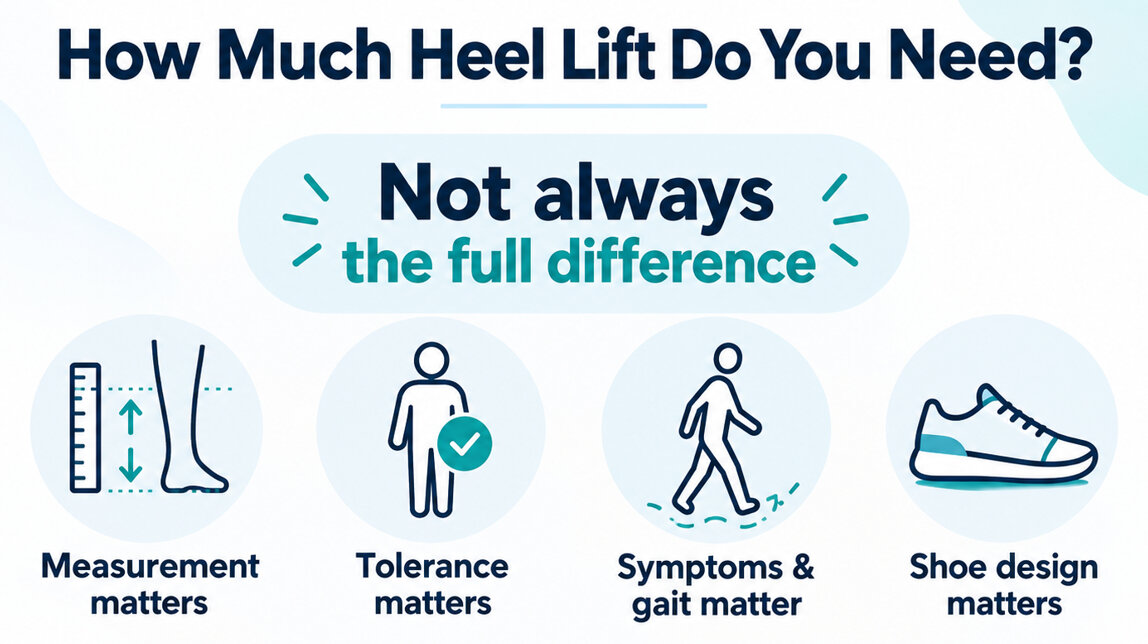
Do not assume your lift should equal the entire measured difference. Accurate measurement guides correction height, but personal tolerance, cause of the discrepancy, prior gait adaptation, symptoms, and shoe design influence the final prescription.
SoleScience notes that some people with long-standing congenital differences may initially tolerate only part of the discrepancy, whereas certain postoperative discrepancies may tolerate more complete correction. A scanogram X-ray can help quantify a true structural difference.
This matters because an incorrect lift may aggravate symptoms. One runner in the supplied Reddit discussion reported significantly worse back and pelvic symptoms after a presumed LLD was treated with a lift; subsequent imaging showed equal bone lengths and pelvic asymmetry instead.
Structural vs Functional Leg Length Discrepancy
A genuine limb length inequality can affect gait and may be associated with lower back pain, hip pain, knee pain, and walking imbalance. A systematic review found a relationship between anatomical LLD and gait deviations, with greater discrepancies generally producing more compensation.
But functional LLD may require rehabilitation, stretching, strengthening, or custom orthotics rather than simply raising one heel. Professional assessment reduces correction error because a clinician can distinguish bone-length difference from alignment-driven short leg syndrome.
The evidence for lifts is encouraging but limited. A systematic review found low-quality evidence that shoe lifts for leg length discrepancy may reduce pain and improve function, while emphasizing that optimal correction thresholds remain uncertain.
Shoe Fit, Walking, and Running With a Heel Lift
Running with a shoe insert is possible for some people, but stability matters. Reddit runners report both improved comfort and problems such as sliding inserts, forefoot pressure, blisters, and altered shoe fit. These anecdotes reinforce why adhesive backing, suitable shoe depth, and secure placement matter during repetitive activity.
When possible, many heel lifts sit more securely beneath the removable footbed rather than above it. A custom orthotic can also be combined with a lift when clinically appropriate. Shoe fit ultimately determines practical comfort.
Pros and Cons of Heel Lifts
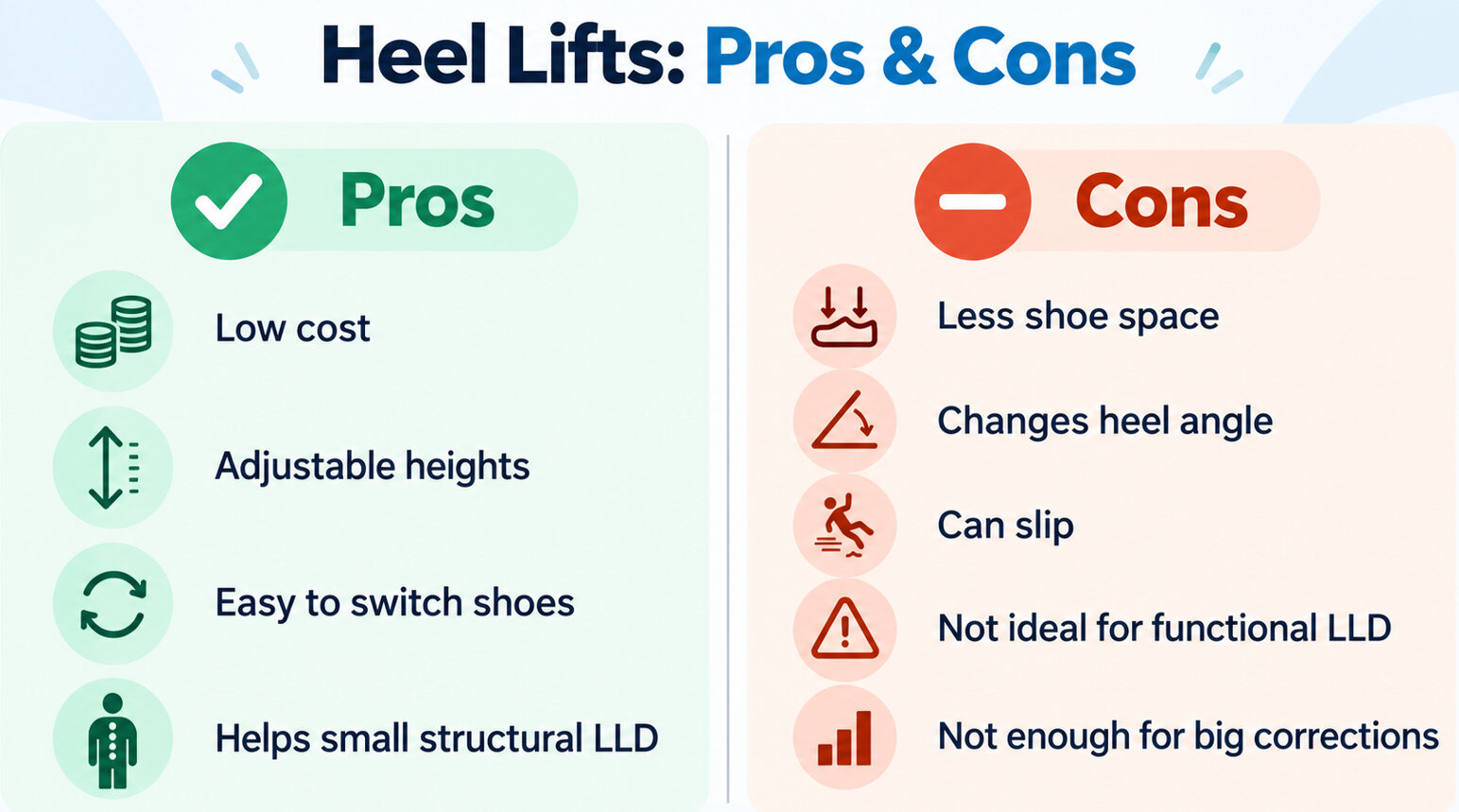
- Pros: inexpensive compared with shoe modification, available in adjustable heights, easy to transfer between compatible shoes, and potentially helpful for small confirmed structural discrepancies.
- Cons: reduce internal shoe volume, can alter heel angle, may slip if poorly secured, and may be inappropriate when the apparent discrepancy is functional or when a larger full-foot correction is required.
FAQ
1. What type of heel lift is best for leg length discrepancy?
For fine adjustment, a 1 mm-layered design such as Clearly Adjustable offers the most precise control. PowerStep adds cushioning, Soul Insole emphasizes soft gel comfort, and OC9 provides a fixed 6 mm foam option. The correct product still depends on your measured discrepancy and footwear.
2. Should a heel lift equal the entire leg length difference?
Not automatically. Gait adaptation, the cause and duration of the discrepancy, symptoms, and personal tolerance all influence lift height. A clinician should determine whether full or partial correction is appropriate.
3. Is a heel lift or full-length lift better?
Heel lifts can work for smaller corrections. A larger discrepancy often makes a full-length shoe lift or external modification more practical because it raises the whole foot rather than creating a large heel-to-toe angle.
4. Can you run with a heel lift?
Yes, some runners do, but the lift must remain stable and the shoe needs enough internal space. If running causes new forefoot, Achilles, knee, hip, or back discomfort, the setup should be reassessed rather than simply increasing the lift.
5. Where should a heel lift sit inside the shoe?
Many designs can sit beneath the existing insole, which can preserve the shoe’s normal footbed shape and help stabilize the insert. Always follow the specific product instructions and make sure the heel remains securely seated inside the shoe.
Final Words
The best heel lifts for leg length discrepancy are the ones matched to a confirmed structural difference, appropriate height, and compatible shoe. Compare adjustable, foam, and gel options, but have persistent or significant discrepancies measured professionally before changing your gait mechanics.