
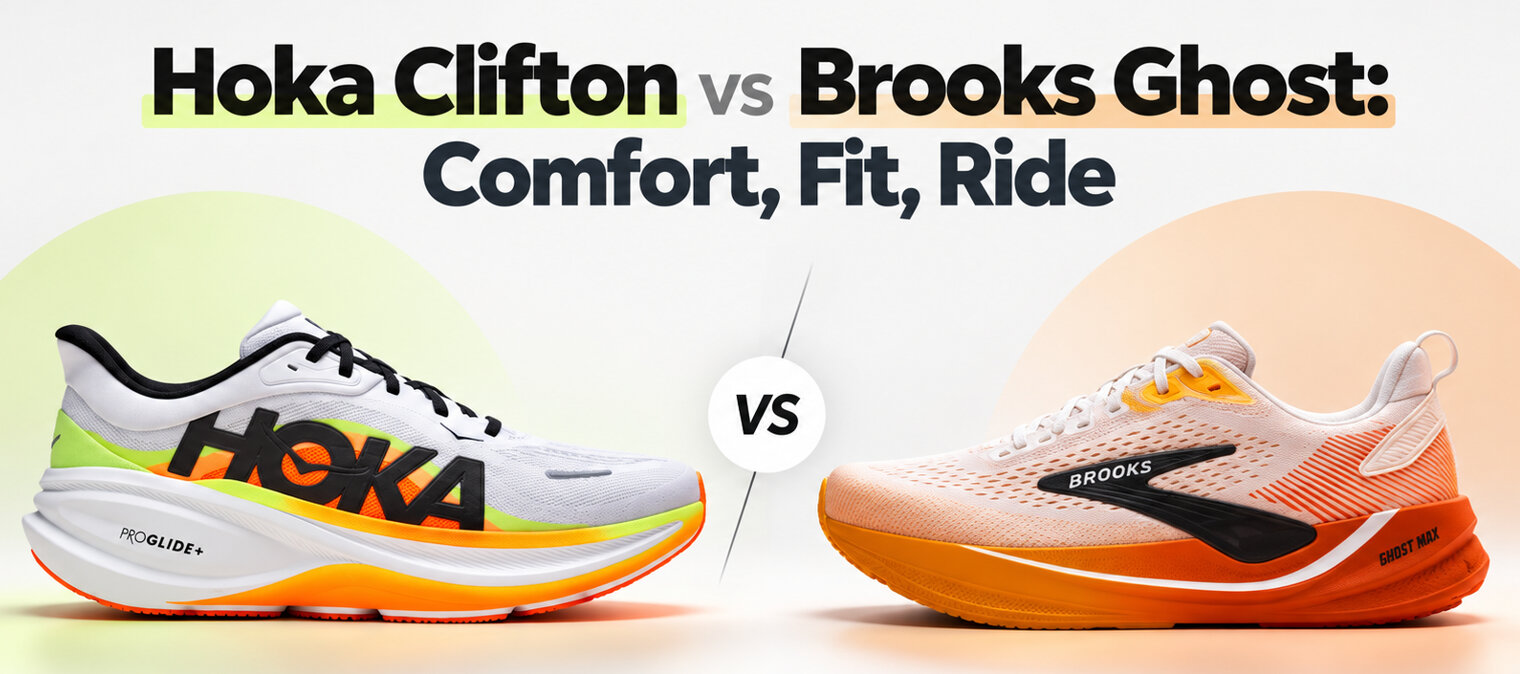
The Hoka Clifton vs Brooks Ghost comparison comes down to ride preference. Clifton 11 gives you a taller, softer, rocker-driven platform. Ghost 18 feels more grounded and traditional. Both are excellent neutral running shoes for everyday mileage, walking, and longer runs.
Hoka Clifton vs Brooks Ghost: Choose by Ride Feel, Not Brand
Both shoes are dependable daily running shoes, but their personalities are different.
Hoka Clifton 11 provides soft cushioning through a compression-molded EVA midsole, while Brooks Ghost 18 uses nitrogen-infused DNA LOFT v3 for balanced cushioning that mixes softness with responsiveness.
Clifton is the more obvious cushioned daily trainer if you enjoy lots of foam underfoot. Its taller platform increases underfoot protection, while Ghost’s lower stack increases ground feel and creates a more familiar running sensation.
Hoka Clifton vs Brooks Ghost for Cushioning and Comfort
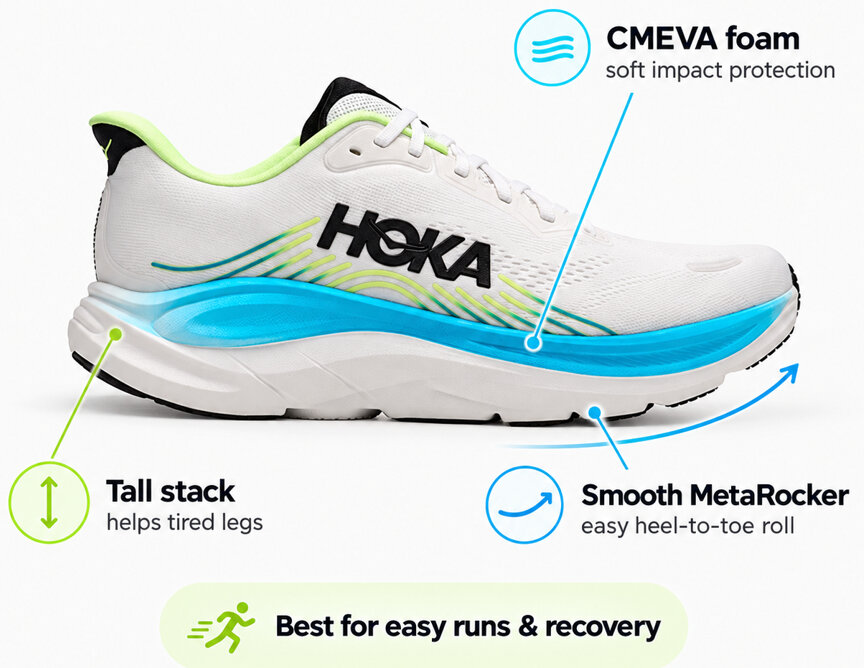
Clifton 11 uses compression-molded EVA, which absorbs landing impact while retaining enough structure for daily training. Its men’s heel stack is about 42 mm, and the shoe uses Smooth MetaRocker technology to promote a rolling heel-to-toe transition.
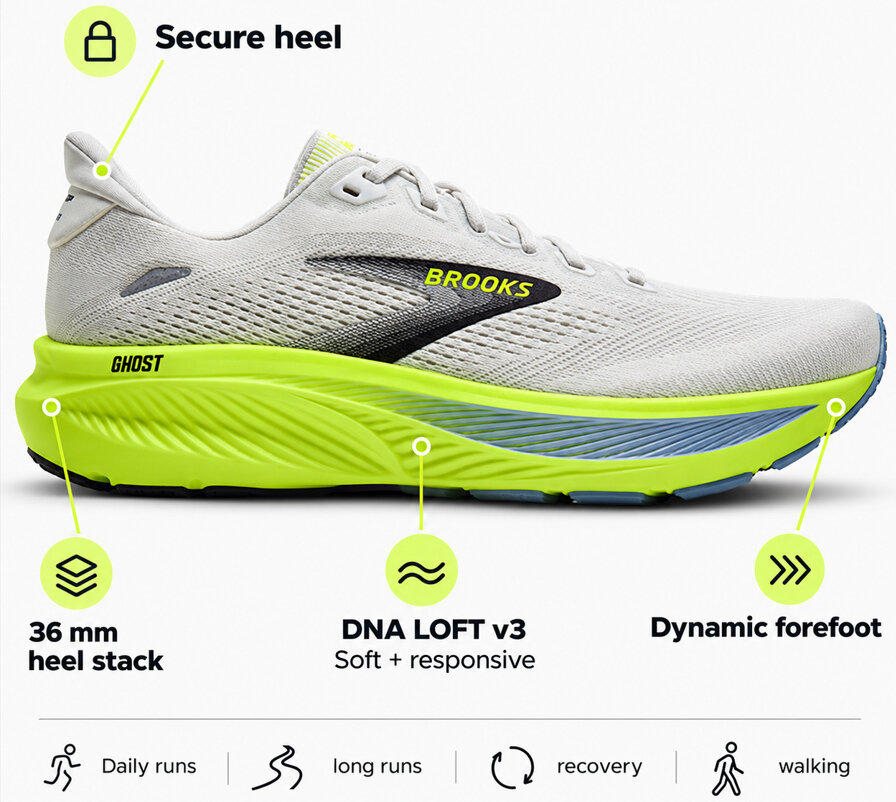
Ghost 18 has a roughly 36 mm heel stack and uses DNA LOFT v3 foam. That cushioning combines softness and responsiveness rather than creating an ultra-squishy feeling. If you like comfortable running shoes but still want pavement feedback, Ghost has the advantage.
Hoka Clifton vs Brooks Ghost for Daily Runs and Long Runs
For easy runs, recovery mileage, and relaxed long run shoes, Clifton’s soft cushioning works beautifully. The tall stack provides protection when your legs feel tired, while rocker geometry assists forward motion and helps the shoe roll smoothly through each stride.
Ghost 18 works across daily running, long runs, recovery runs, and walking. Its secure heel increases inherent stability, while the dynamic forefoot supports toe-off. That makes it a reliable choice when you want one shoe for varied everyday mileage rather than maximum cushioning.
Ride Geometry: Rocker Versus a More Traditional Stride
The geometry may matter more than the foam. Clifton has an 8 mm heel drop, while Ghost uses a 10 mm heel drop. An 8 mm drop creates moderate geometry, while a higher 10 mm drop generally reduces how much ankle dorsiflexion is required during the stride.
Clifton’s MetaRocker encourages your foot to roll forward. Its rearfoot-focused Active Foot Frame supports rearfoot stability, so the high platform does not feel as unstable as its height might suggest.
Ghost feels more conventional. Its grounded ride suits traditional runners who want to feel the road beneath them, and independent testing found it easier to use across different normal training paces.
Fit, Toe Box, and Width Options
Both shoes use lightweight mesh to improve ventilation. Clifton’s engineered mesh upper feels comparatively roomy, while Ghost’s engineered air mesh and secure upper limit unnecessary foot movement.
The Clifton toe box felt wider in direct testing, which allows more natural toe splay. It comes in Regular, Wide, and Extra Wide fits, making it a strong choice for shoppers seeking wide running shoes.
Ghost gives you even more width categories: Narrow, Medium, Wide, and Extra Wide. This can make Brooks easier to fine-tune for different foot shapes, even though the standard Ghost fit feels sleeker and more secure than Clifton.
Ultimately, foot shape affects fit preference. Multiple widths accommodate different foot shapes, and correct fit improves running comfort far more than choosing a shoe because of brand reputation.
Stability, Weight, and Walking Comfort
Clifton 11 is a bit lighter. The men’s model weighs about 283 g, while the women’s version weighs 236 g. Ghost 18 weighs 289.2 g for men and 260.8 g for women.
Ghost has the stability edge despite both models offering neutral support rather than traditional motion control. Its secure heel and lower, more grounded platform make the shoe feel planted. Clifton counters with a wide platform and Active Foot Frame, so its extra stack still feels controlled.
For running shoes for walking, Clifton is especially appealing. Soft cushioning supports easy mileage and long periods on your feet, and current testing found it comfortable during extended walking and standing. Ghost remains excellent if walking comfort for you means firmer support and less rocker sensation.
Durability, Traction, and Value
Clifton 11 uses an abrasion-resistant rubber outsole, so the rubber protects high-wear areas while preserving the lightweight design. Ghost 18 emphasizes solid traction for confident road running and walking.
Current pricing is also close. Clifton 11 is around $155, while Ghost 18 is nearly at $150 in the U.S.
That five-dollar difference should not decide the purchase. Your intended use determines the final choice. Choose Clifton for cushioning, rocker-assisted movement, and a roomier feel. Choose Ghost for stability, ground feel, and a traditional daily-trainer experience.
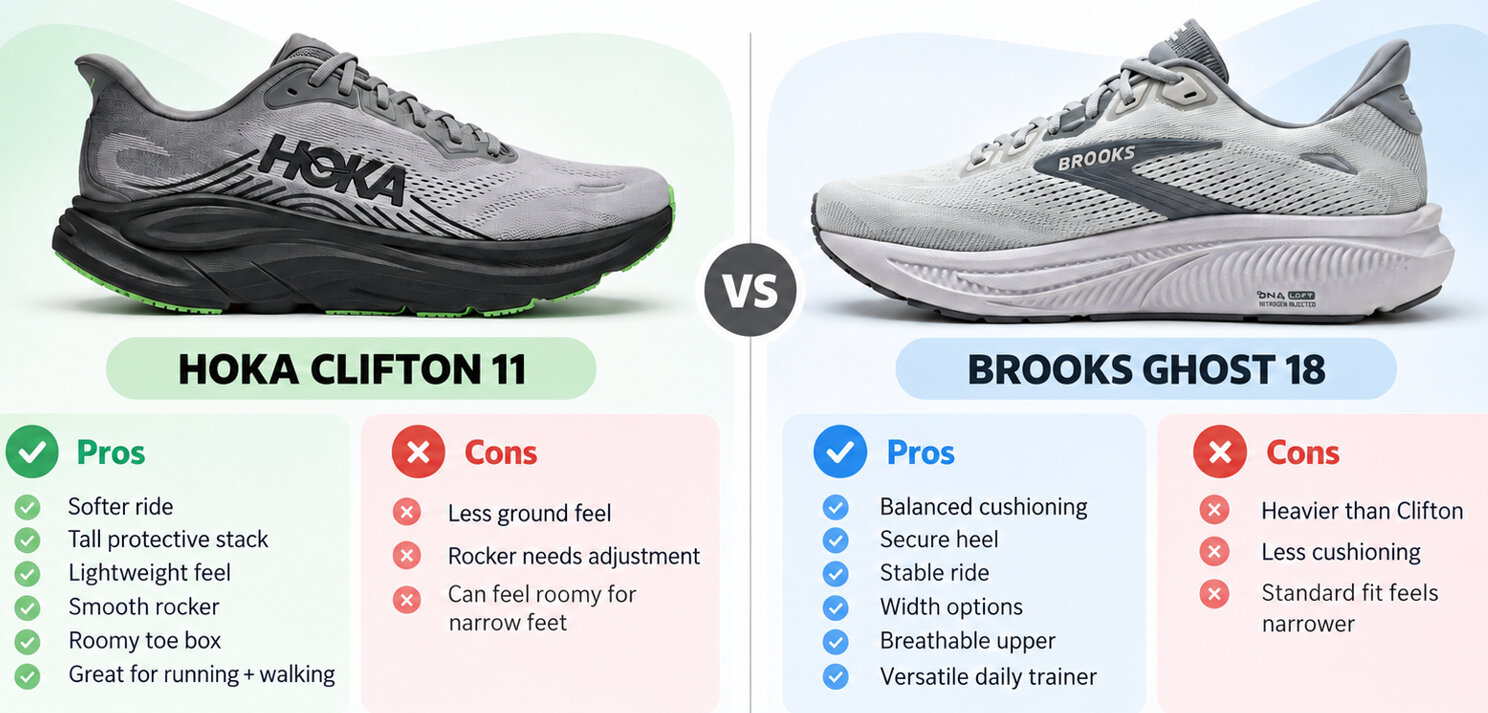
Pros and Cons
Hoka Clifton 11
- Pros: softer ride, tall protective stack, lightweight feel, Smooth MetaRocker, roomy toe box, 8 mm drop, and strong comfort for running and walking.
- Cons: rocker geometry may require adjustment, the high platform provides less ground feel, and the standard fit may feel roomy to narrow feet.
Brooks Ghost 18
- Pros: balanced cushioning, secure heel, stable ride, broad width selection, breathable upper, 10 mm drop, and versatility across road running, recovery runs, and walking.
- Cons: heavier than Clifton, less underfoot cushioning, and the standard fit feels narrower.
FAQ
1. Which is softer, Hoka Clifton or Brooks Ghost?
The Clifton 11 feels softer and provides more foam underfoot. Ghost 18 remains cushioned, but its DNA LOFT v3 platform produces a more grounded and traditional ride.
2. Which is better for long runs?
Both can handle long distances. Clifton is attractive for slow and comfortable long runs because of its higher stack and soft ride, while Ghost works well if you prefer greater road feel and a firmer transition.
3. Which is better for wide feet?
Both have dedicated wide options. Clifton offers Regular, Wide, and Extra Wide, while Ghost offers Narrow, Medium, Wide, and Extra Wide. Clifton’s standard toe area also feels roomier in direct testing.
4. Is Brooks Ghost more stable than Hoka Clifton?
Generally, yes. Ghost’s lower platform, secure heel, and grounded geometry give it a slight stability advantage, although Clifton’s wide base and rearfoot Active Foot Frame still provide useful inherent stability.
5. Which is better for walking?
Clifton gets our preference if you want lightweight softness for long days on your feet. Ghost is better if you prefer firmer support, a more conventional stride, and less rocker sensation.
Bottom Lines
In Hoka Clifton vs Brooks Ghost, choose Clifton 11 for softer cushioning, a roomy fit, and smooth rocker transitions. Pick Ghost 18 for greater stability, ground feel, and traditional daily training.
If possible, try both – your foot shape and preferred ride should make the final decision.