
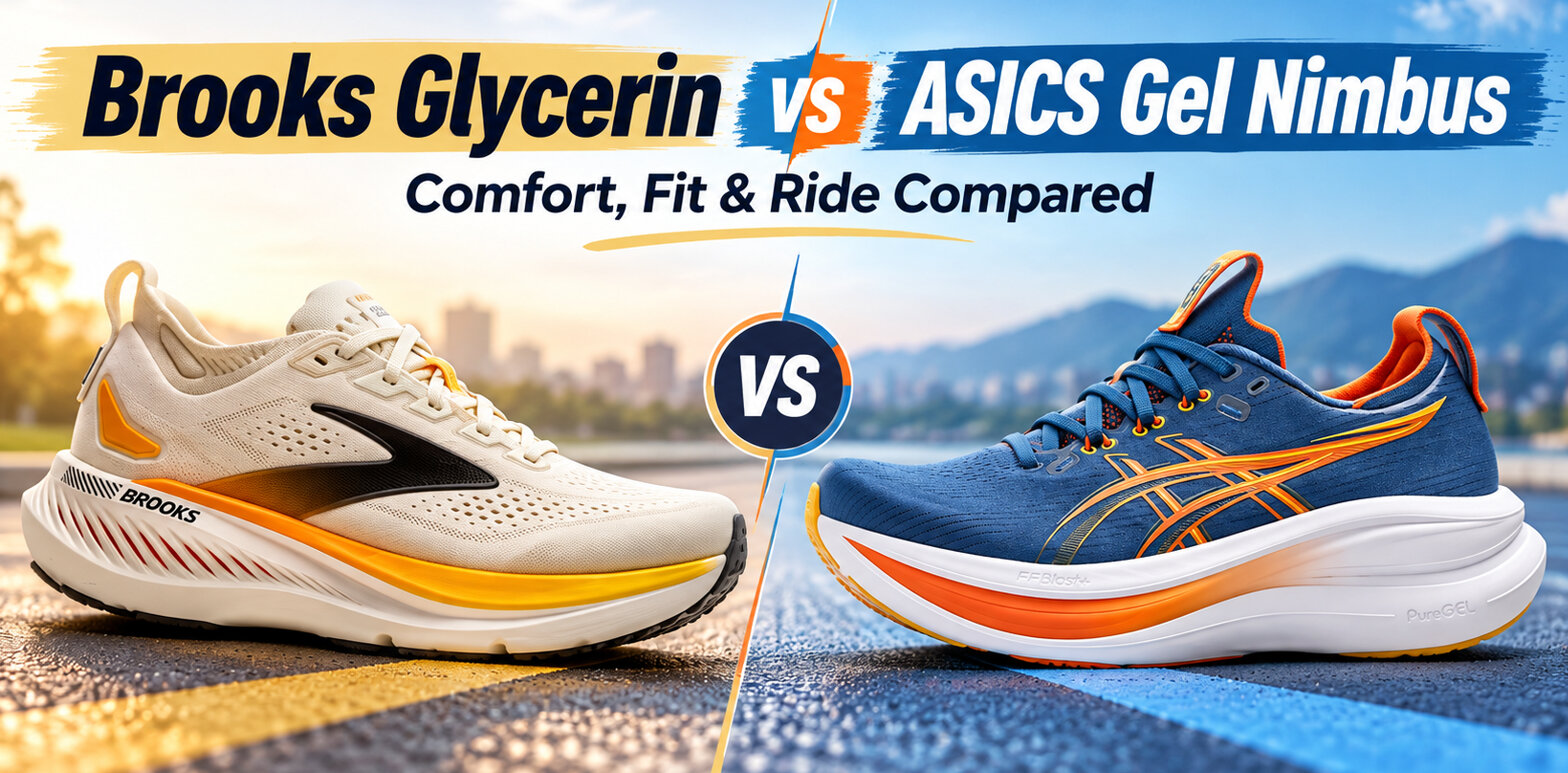
The Brooks Glycerin vs ASICS Gel Nimbus matchup brings together two of the best-known max cushion running shoes. The current Glycerin 23 feels plush yet balanced, while Gel-Nimbus 28 goes lighter and softer. Today, we will compare cushioning, fit, stability, long runs, and value.
Brooks Glycerin vs ASICS Gel Nimbus: The Better Choice Depends on Your Ride Preference
Both are premium neutral daily trainers, but they do not feel identical.
Brooks Glycerin 23 uses dual-cell DNA TUNED cushioning for soft landings, steady transitions, and a stronger toe-off. ASICS Gel-Nimbus 28 combines FF BLAST PLUS with PureGEL for a softer, highly protective underfoot sensation.
Our simple verdict is this: choose Nimbus 28 if you want lightweight softness and maximum impact protection. Choose Glycerin 23 if you prefer a premium daily trainer that still feels plush but a little more planted and traditional.
Brooks Glycerin vs ASICS Gel Nimbus for Cushioning and Softness
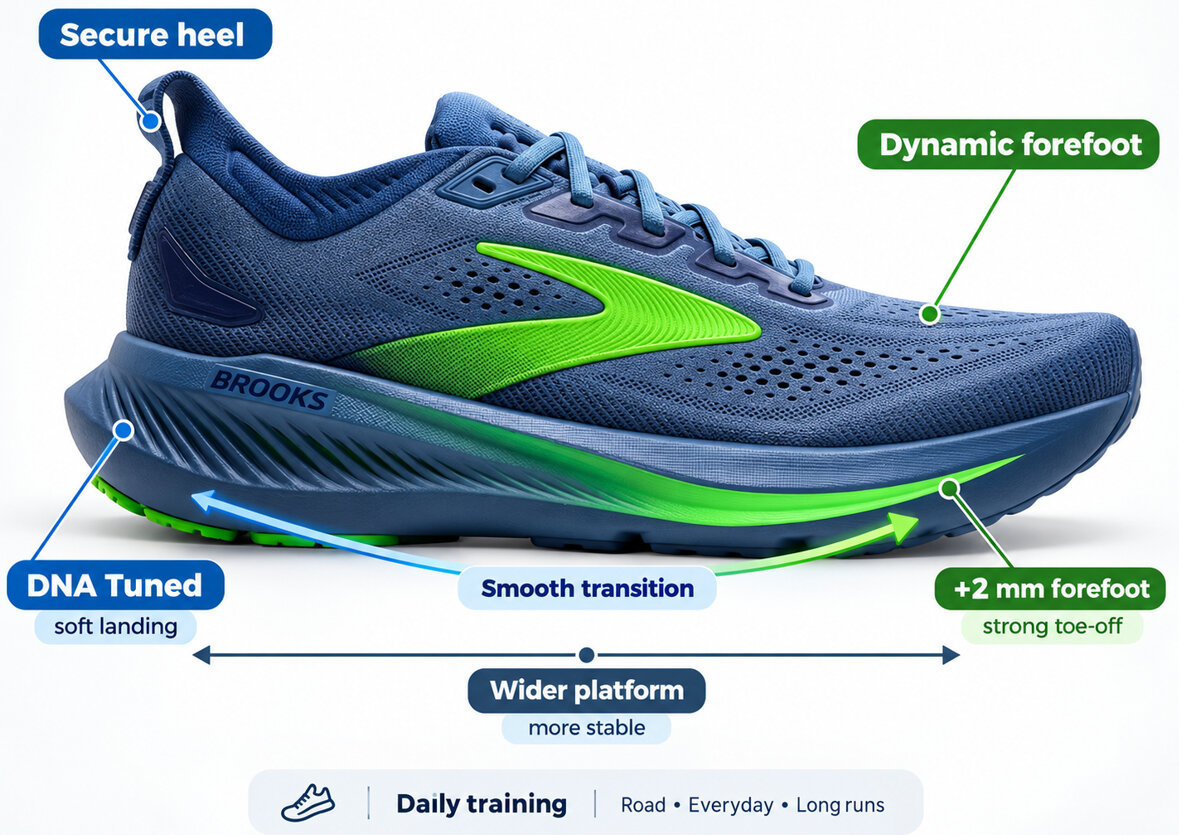
Brooks’ DNA TUNED cushioning uses nitrogen-infused foam with a dual-cell construction. That foam cushions landings while supporting a more powerful toe-off, and Brooks added another 2 mm of forefoot cushioning to the Glycerin 23. A wider platform increases inherent stability and helps the shoe deliver smooth transitions from heel to toe.
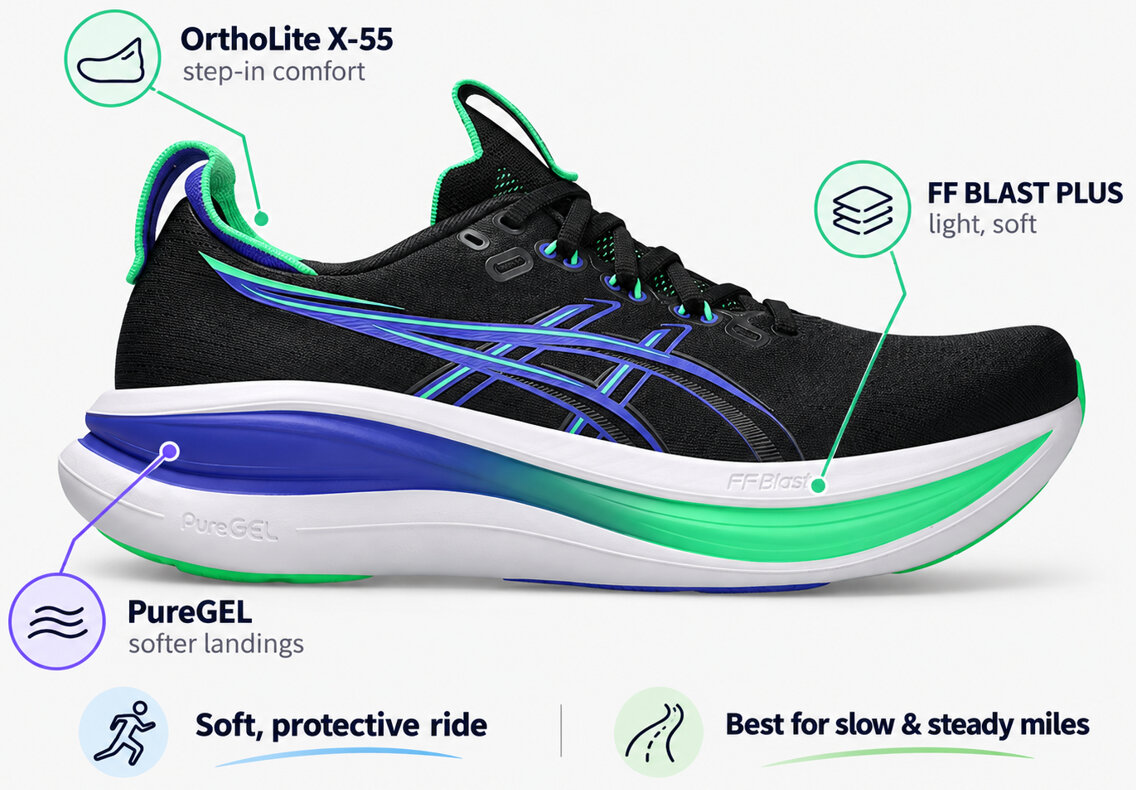
Nimbus takes a different approach. FF BLAST PLUS provides lightweight softness, while PureGEL technology helps reduce landing harshness. An OrthoLite X-55 sockliner improves step-in comfort and moisture management, making Nimbus especially convincing if your idea of great cushioned running shoes is a soft, protective ride.
Independent 2026 testing agrees with that distinction. RTINGS found Nimbus 28 more cushioned and protective, while Glycerin 23 delivered a more conventional workhorse feel with more ground connection.
Brooks Glycerin vs ASICS Gel Nimbus for Long Runs and Daily Training
Both qualify as excellent long run shoes, but Nimbus 28 has a slight edge if your priority is minimizing road impact during slow or steady mileage. Its soft cushioning reduces road impact, and ASICS specifically positions the model for smoother longer-distance running.
Glycerin 23 feels more versatile for daily training. Brooks lists it for road running, everyday runs, and long runs, while its secure heel, dynamic forefoot, and balanced support create a stable rhythm without turning it into a traditional stability shoe.
For recovery run shoes, we would lean Nimbus when softness matters most. For an everyday workhorse that can move between easy miles and normal training, Glycerin feels more balanced.
Weight, Stability, and Responsiveness Change the Feel
Both shoes have an official 8 mm heel drop. However, Nimbus 28 is noticeably lighter: the men’s version weighs 281 g and the women’s model 242 g. Glycerin 23 weighs 300.5 g for men and 269.3 g for women.
ASICS says Nimbus 28 is approximately 20g lighter than its predecessor. That reduction helps a heavily cushioned shoe feel less bulky, while its neutral platform remains stable enough for relaxed mileage.
Glycerin is heavier but feels secure. Its wide platform supports stable transitions, while the secure heel works with a dynamic forefoot. If you want plush cushioning without a very floating sensation, the Glycerin setup can feel reassuring.
Fit, Toe Box, and Wide Sizes
Both shoes use an engineered knit upper, improving softness, breathability, and accommodation around the foot. Correct fit improves running comfort, so the better choice may come down to your foot shape rather than foam technology.
When Glycerin 23 Fits Better
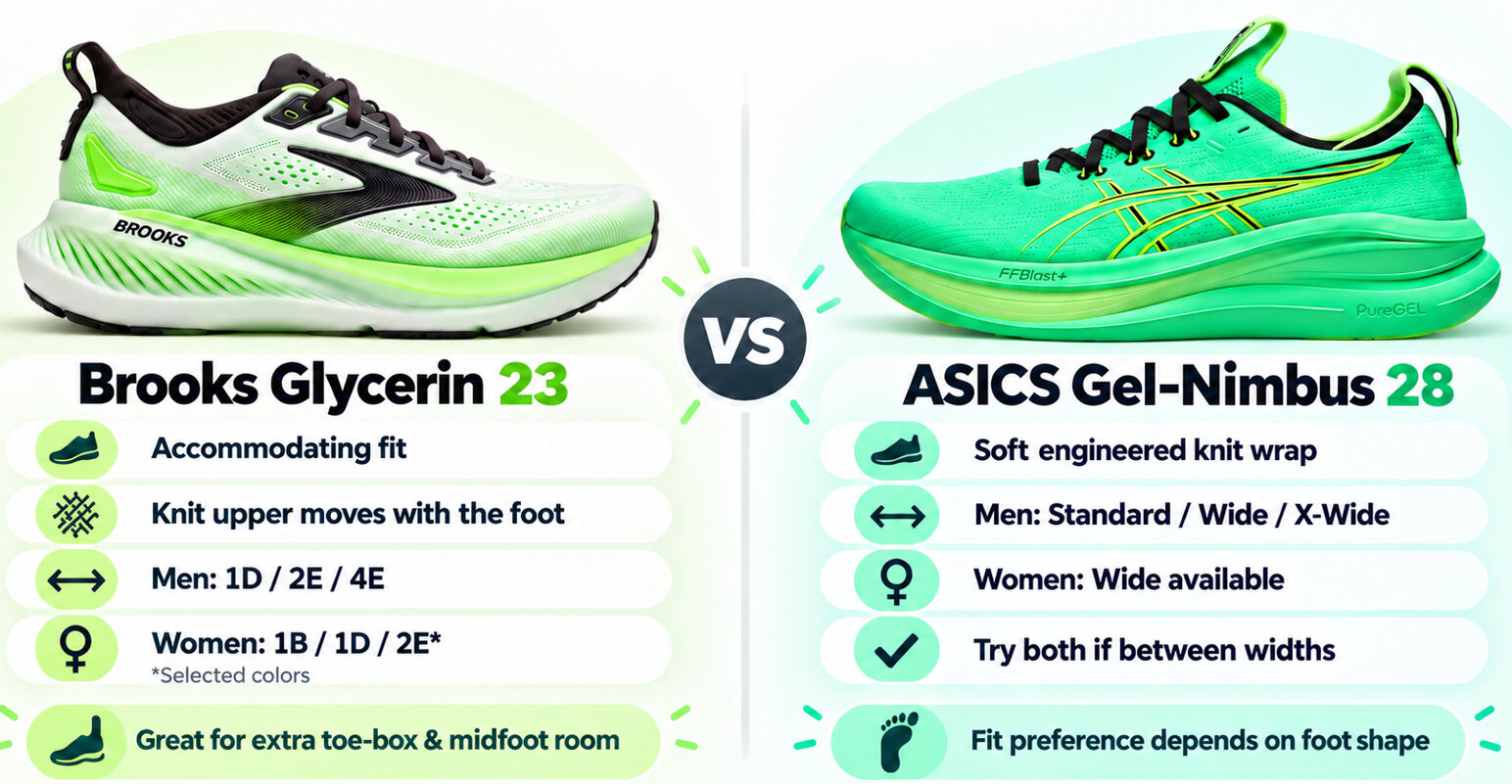
Brooks specifically describes Glycerin 23 as having an accommodating fit. Men’s sizing includes Medium 1D, Wide 2E, and Extra Wide 4E, while women’s versions are offered in Medium 1B, Wide 1D, and Extra Wide 2E on selected colors.
That makes Glycerin an excellent candidate when shopping for wide running shoes. Its knit upper accommodates foot movement, and the generous width selection is useful for runners who need more toe-box or midfoot room.
When Gel-Nimbus 28 Fits Better
Nimbus 28 also has wider configurations. Current men’s Gel-Nimbus 28 Wide listings include Standard, Wide, and Extra Wide options, while women’s Wide versions are available separately.
The Nimbus engineered knit softly wraps the foot rather than creating a rigid upper. Foot shape still affects fit preference, so we would try both if you sit between widths.
Outsole, Durability, and Everyday Value
Nimbus 28 uses HYBRID ASICSGRIP, combining ASICSGRIP rubber with AHARPLUS. HYBRID ASICSGRIP improves outsole traction, while AHARPLUS contributes to outsole durability.
Both product families have reputations as high-mileage road running trainers, although actual life depends on weight, gait, terrain, and rotation. We estimate Brooks shoes at 300–500 miles and ASICS guidance around 450–500 miles, but those numbers should be treated as general replacement ranges rather than guarantees.
Price barely separates them. Glycerin 23 currently costs $175 in the U.S., while Gel-Nimbus 28 is $170. At this level, your running purpose should determine the better shoe rather than the five-dollar difference.
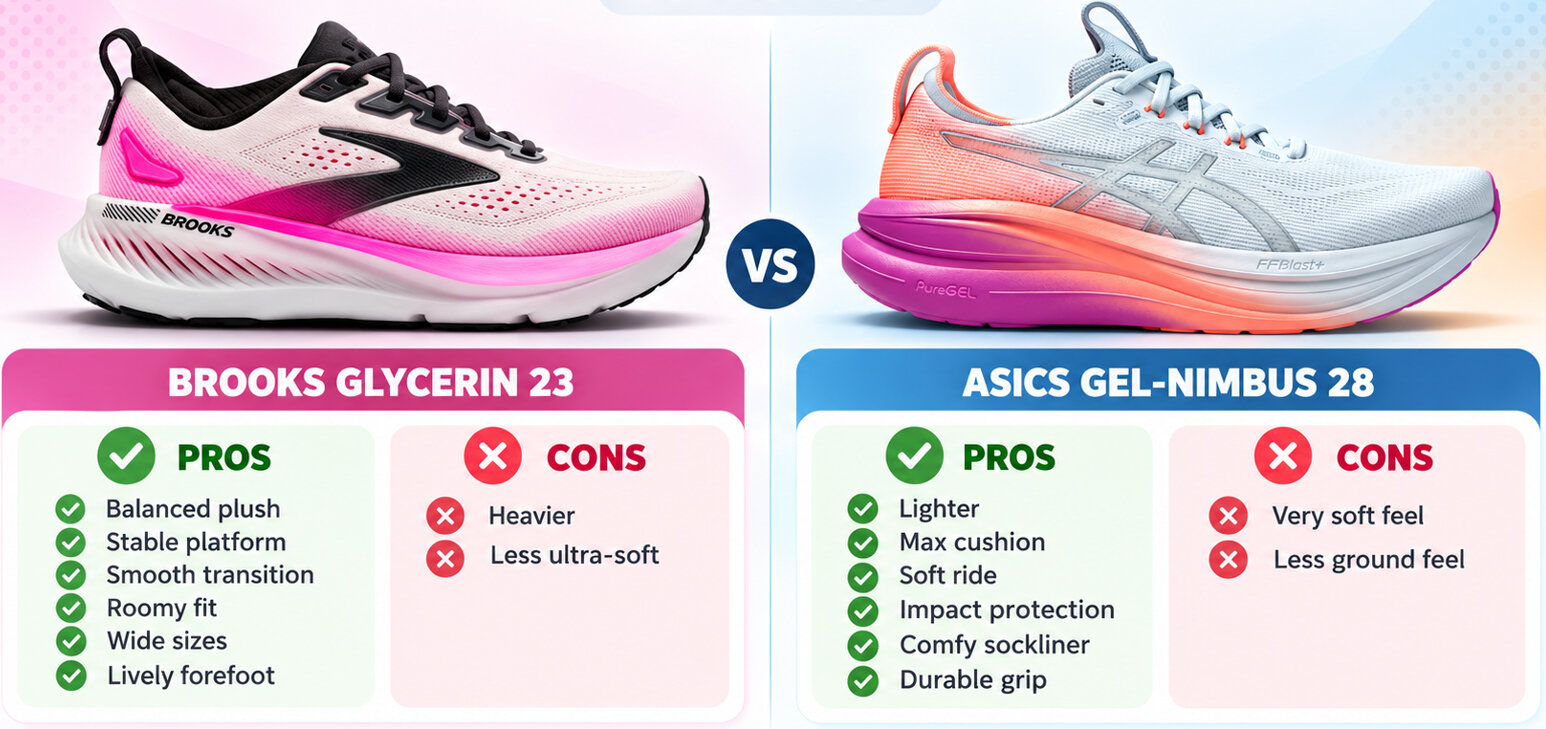
Pros and Cons
Brooks Glycerin 23
- Pros: plush but balanced cushioning, stable platform, smooth heel-to-toe transition, accommodating upper, excellent width selection, and a more energetic forefoot feel.
- Cons: heavier than Nimbus 28 and less cloud-like if maximum softness is your main priority.
ASICS Gel-Nimbus 28
- Pros: lighter weight, maximum cushioning, soft FF BLAST PLUS and PureGEL ride, strong impact protection, comfortable OrthoLite sockliner, and durable HYBRID ASICSGRIP outsole.
- Cons: the very soft ride may feel less lively to runners who prefer stronger ground feel or a firmer daily trainer.
FAQ
1. Which is softer, Brooks Glycerin or ASICS Gel-Nimbus?
The Gel-Nimbus 28 generally provides the softer, more protective experience. FF BLAST PLUS and PureGEL prioritize underfoot softness, while Glycerin 23 balances plush cushioning with a more planted transition.
2. Which is better for long runs?
Both are strong long run shoes. Nimbus 28 gets our preference for relaxed long-distance running because of its lighter weight and highly protective cushioning, while Glycerin 23 is excellent if you want long-run comfort with a slightly more traditional ride.
3. Which is better for wide feet?
Both now offer wide sizes. Brooks provides broad Medium, Wide, and Extra Wide availability, while current Gel-Nimbus 28 listings also include Wide and Extra Wide configurations. Try the actual width because foot shape determines comfort more reliably than brand reputation.
4. Are Glycerin and Gel-Nimbus stability shoes?
The standard models are neutral shoes. Glycerin 23 provides balanced support through its geometry, while Nimbus 28 is officially classified as neutral. Runners wanting added Brooks stability can choose Glycerin GTS 23, which adds GuideRails support.
5. Which is better for walking?
Both work well for walking because of their cushioning and stable platforms. Nimbus is attractive if you prefer maximum underfoot softness, while Glycerin’s stable platform and accommodating fit make it a strong choice for long periods on your feet.
Final Words
In Brooks Glycerin vs ASICS Gel Nimbus, choose Nimbus 28 for lighter, softer long-run protection and Glycerin 23 for a plush but steadier daily-training ride. If possible, try both – the best choice is ultimately the one that matches your foot shape and preferred cushioning feel.