
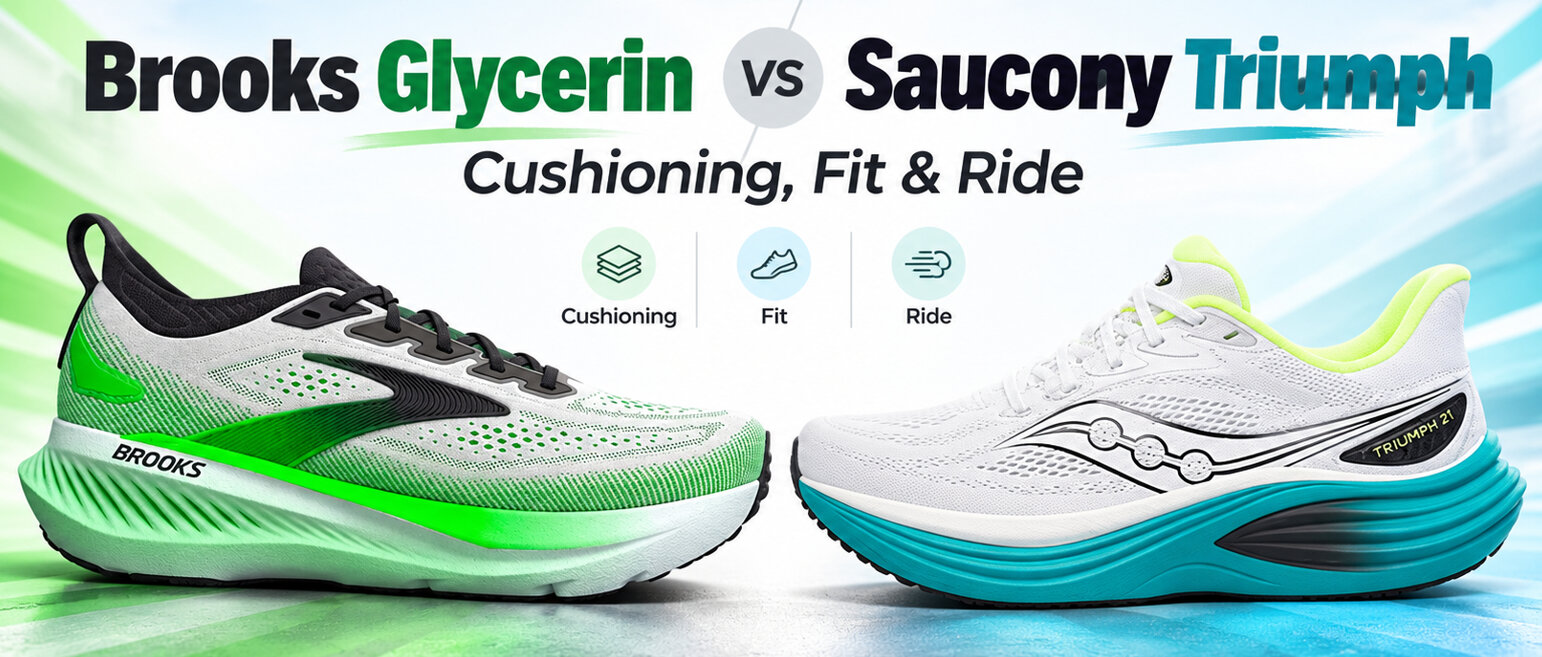
The Brooks Glycerin vs Saucony Triumph battle is much closer than it used to be. Glycerin 23 offers plush, stable comfort, while Triumph 24 is dramatically lighter and more energetic. Both are premium daily trainers, but they now suit different types of runners.
Brooks Glycerin vs Saucony Triumph: Choose Stability or Lightweight Energy
Both are high-cushion neutral running shoes made for everyday mileage, easy runs, and longer distances. However, the current Brooks Glycerin 23 focuses on controlled plushness, while the Saucony Triumph 24 turns the traditionally cushioned Triumph into a lighter and more responsive max cushion running shoe.
Brooks Glycerin vs Saucony Triumph for Cushioning and Ride Feel
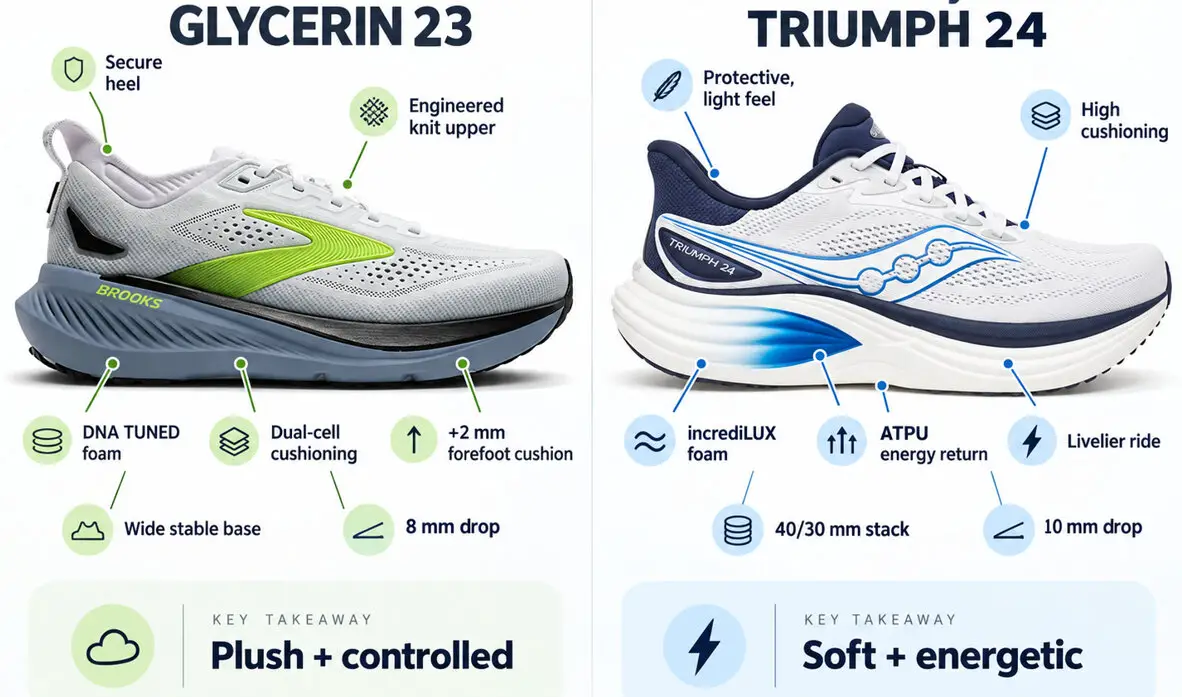
Glycerin 23 uses dual-cell, nitrogen-infused DNA TUNED cushioning. The foam cushions landings while a tuned forefoot supports toe-off, and Brooks added another 2 mm of forefoot cushioning for better long-run comfort. A wide platform increases stability, while a secure heel reduces unwanted movement.
The shoe has an official 8 mm heel drop, an engineered knit upper, balanced support, and a men’s weight of 300.5 g. That knit upper accommodates foot movement while the broad geometry creates stable transitions. The result is a plush ride that still feels controlled.
Triumph 24 has changed more dramatically. Its new incrediLUX foam replaces the PWRRUN PB construction used in Triumph 23. The ATPU-based foam absorbs impact but also returns significantly more energy, turning Triumph into a much livelier cushioned running shoe.
Its official specifications are striking: 250 g for men, 216 g for women, 10 mm drop, and a 40/30 mm stack. That means Triumph provides plenty of underfoot protection without the heavy feel normally associated with high-cushion trainers.
Brooks Glycerin vs Saucony Triumph for Daily and Long Runs
For daily running shoes, Glycerin feels predictable. It is built specifically for road running, everyday runs, and long run shoes use. Soft cushioning reduces road impact, while the stable base supports relaxed mileage when you simply want to cruise.
Triumph 24 is equally comfortable at easy pace but gives you more flexibility when your pace increases. Independent testing found it substantially lighter and much more energetic than Glycerin 23, with stronger long-run cushioning.
That makes Triumph especially attractive for energetic long runs and high-mileage training. Glycerin instead favors stable easy miles, which can feel reassuring when your legs are tired or when maximum energy return is not the goal.
Weight and Energy Return Create the Biggest Performance Gap
Weight may be the biggest practical difference. Triumph 24 weighs only 8.8 oz/250 g in the men’s version, compared with 10.6 oz/300.5 g for Glycerin 23. The lighter weight reduces running effort and makes Triumph easier to turn over during faster sections.
Current laboratory testing reinforces that difference. The tested Triumph came in around 240.9 g versus 299.4 g for Glycerin, while Triumph returned significantly more energy through the stride.
Glycerin answers with stability. Its wide platform and secure heel create inherent support, and its balanced support setup feels more planted than Triumph’s energetic geometry. Runners wanting even more guidance can choose Glycerin GTS 23, which adds GuideRails.
Heel Drop, Stack Height, and Transition
Officially, Glycerin has an 8 mm drop, while Triumph has a 10 mm drop. Triumph’s official stack is 40 mm at the heel and 30 mm at the forefoot.
Interestingly, independent measurements found both shoes much closer in actual drop. That is a useful reminder that heel drop numbers do not tell the whole story; foam compression, rocker geometry, and where the stack is measured all affect how a shoe feels.
Triumph 24 also uses a redesigned, more flexible outsole. The flexible outsole smooths transitions, while its high stack provides protection during high-mileage training and recovery run shoes use.
Fit, Toe Box, and Width Options
Glycerin 23 has the advantage for wide running shoes. Men’s sizing includes Medium 1D, Wide 2E, and Extra Wide 4E, giving broader feet more room without forcing runners to size up.
Triumph 24 is available in Medium and Wide. Its breathable comfort mesh improves airflow and creates a plush, secure fit, but runners needing extra-wide sizing have more options with Brooks.
Neither shoe has a universally better toe box. Correct fit improves running comfort, so foot width and forefoot shape should matter more than the logo on the side.
Walking, Recovery Runs, and All-Day Comfort
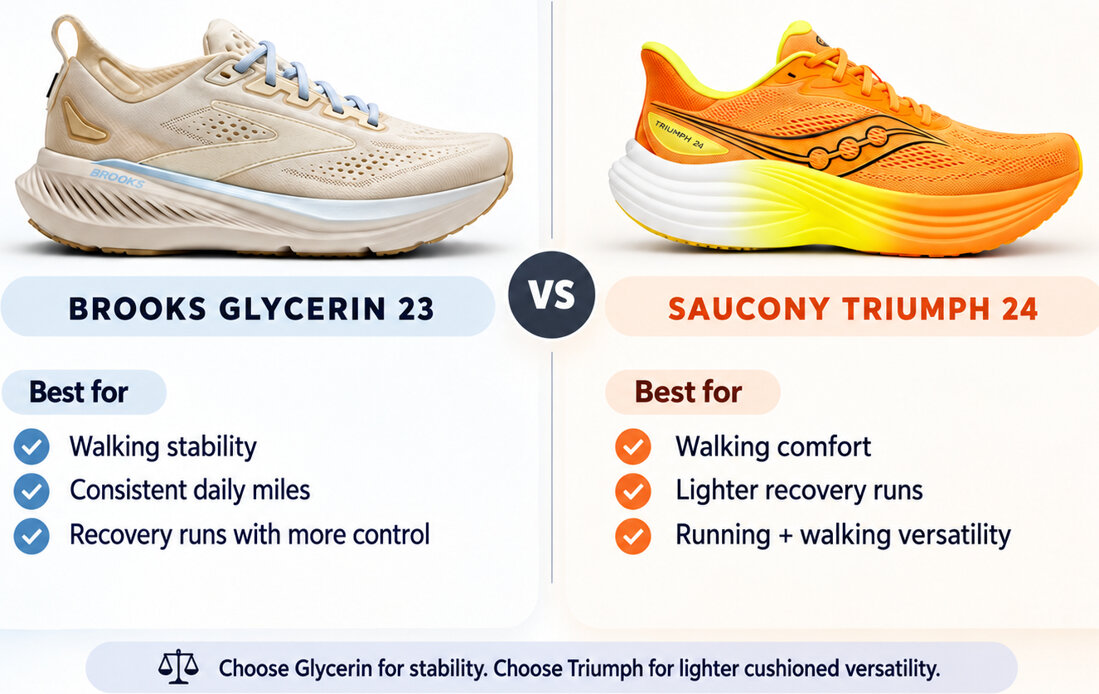
Both work well beyond running. Triumph 24 is officially listed for running and walking, and its light construction makes walking comfort one of its hidden strengths. The comfort mesh improves airflow, while lightweight cushioning reduces fatigue.
Glycerin feels heavier but more grounded. Its wide base and controlled plushness are useful if you spend hours standing or prefer a stable walking shoe.
For recovery runs, Triumph has the advantage if you want deep cushioning without carrying extra weight. Glycerin makes more sense if recovery means slowing down and prioritizing stability over bounce.
Outsole, Durability, and Price
Triumph 24 uses an XT-900 carbon rubber outsole. The rubber protects the outsole, adds traction and durability, while strategic cutouts improve flexibility through the forefoot.
Glycerin is also designed as a durable daily workhorse. Its tuned cushioning, wide platform, and road-focused construction prioritize consistent mileage rather than speed.
Price barely separates them. Triumph 24 currently costs around $170, while Glycerin 23 is approximately $175 in the U.S.
Pros and Cons
Brooks Glycerin 23
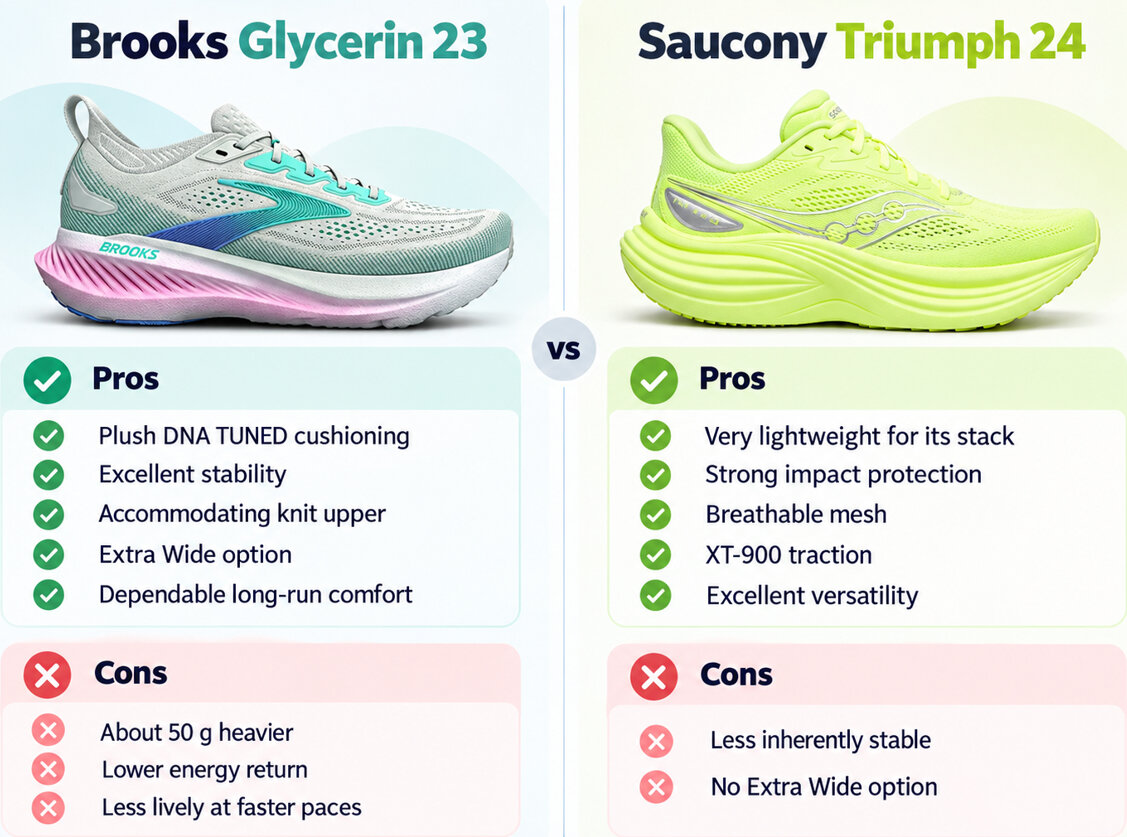
- Pros: plush DNA TUNED cushioning, excellent stability, secure heel, smooth transitions, accommodating engineered knit, Extra Wide option, and dependable long-run comfort.
- Cons: roughly 50 g heavier than Triumph 24, lower energy return, and less lively when increasing pace.
Saucony Triumph 24
- Pros: very lightweight for its stack, energetic incrediLUX foam, strong impact protection, breathable mesh, XT-900 traction, smooth transitions, and excellent versatility.
- Cons: less inherently stable than Glycerin and no Extra Wide option in the standard current range.
FAQ
1. Which is softer, Brooks Glycerin or Saucony Triumph?
Both provide plush cushioning, but Triumph 24 offers greater cushioning performance and energy return in current testing. Glycerin 23 feels softer than a traditional trainer yet more controlled and planted.
2. Which is better for long runs?
Triumph 24 gets the edge for most runners because its lighter construction reduces fatigue while incrediLUX provides high cushioning and energy return. Glycerin remains an excellent option if you prioritize stable, relaxed long-distance running.
3. Which is more stable?
Glycerin 23 is the more stable shoe. Its wide platform, secure heel, and tuned cushioning create a steadier base, while current testing also gives it the stability advantage over Triumph 24.
4. Which is better for wide feet?
Glycerin offers more width choices, including Medium, Wide, and Extra Wide in men’s sizing. Triumph is available in Medium and Wide, so Brooks is the safer choice if you need 4E space.
5. Which is better for walking and easy runs?
Both are comfortable. Triumph feels lighter and more energetic for long periods on your feet, while Glycerin is preferable if you value a stable base and more controlled neutral support.
Final Words
In Brooks Glycerin vs Saucony Triumph, choose Triumph 24 for lightweight cushioning, energy return, and livelier long runs. Pick Glycerin 23 for stability, broader sizing, and controlled plush comfort.
Your foot shape, pace, and preferred ride feel should make the final decision.