
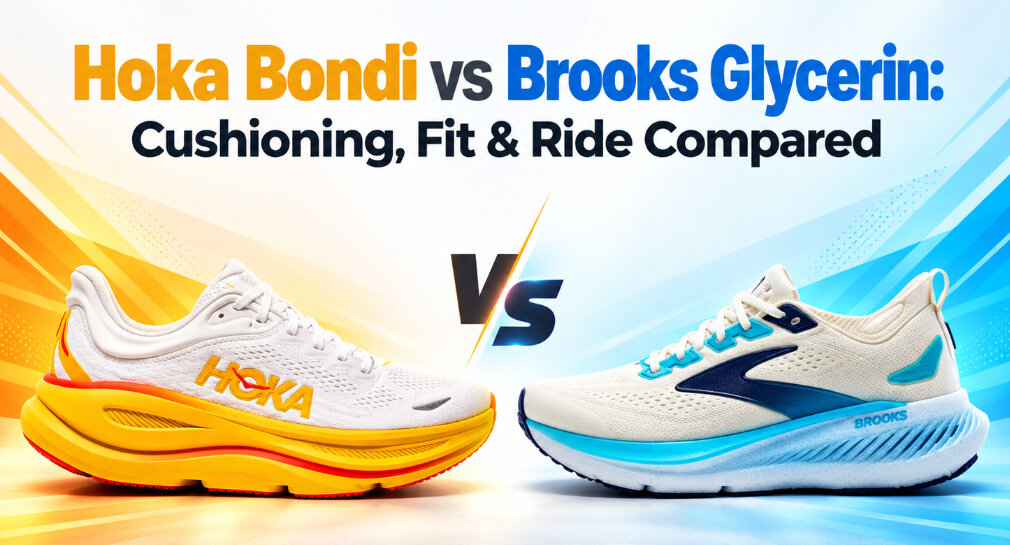
The Hoka Bondi vs Brooks Glycerin matchup puts two premium max cushion running shoes head to head.
Bondi 9 gives you a taller, rocker-driven platform for maximum protection. Glycerin 23 feels plush but more traditional, making it a versatile choice for everyday mileage and long runs.
Hoka Bondi vs Brooks Glycerin: Choose Bondi for Maximum Protection or Glycerin for Versatility
Both are neutral running shoes, but they deliver comfort differently. Hoka Bondi 9 uses supercritical EVA and a tall platform, while Brooks Glycerin 23 uses dual-cell DNA TUNED cushioning and a broad, stable base.
If you want maximum underfoot protection for slow miles, recovery, walking, or standing, Bondi is the clearer choice.
If you want a cushioned daily trainer that feels plush without losing a familiar running rhythm, Glycerin is easier to use across normal training.
Hoka Bondi vs Brooks Glycerin for Cushioning and Ride
Bondi 9’s supercritical EVA absorbs road impact while providing more resilience than the older Bondi foam.
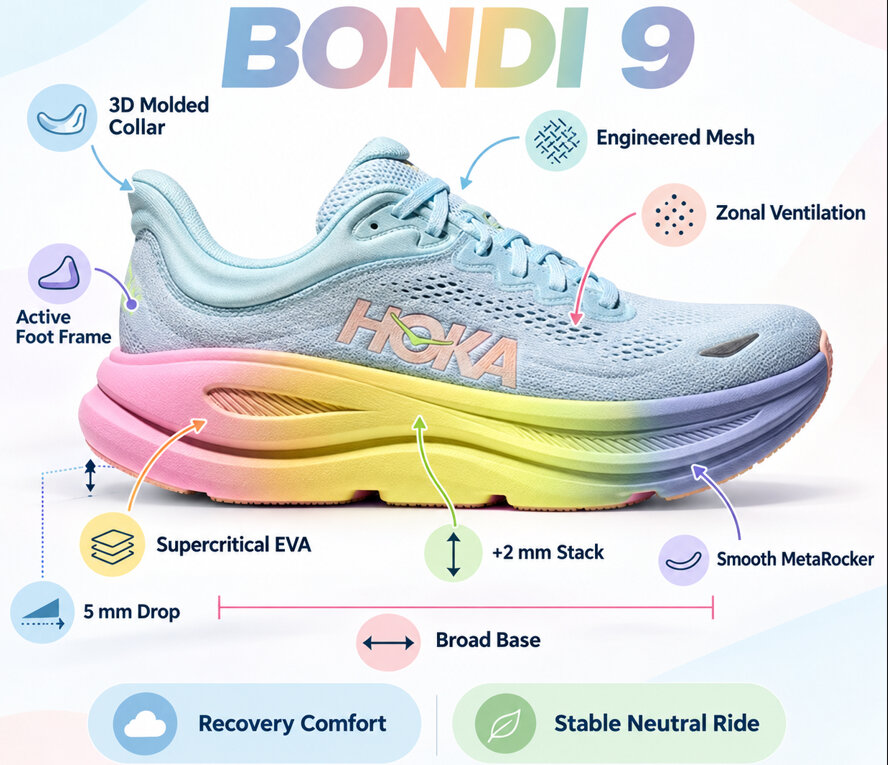
Hoka also raised the stack by 2 mm, added a 3D molded collar for heel comfort, and uses breathable engineered mesh with zonal ventilation.
Its Smooth MetaRocker promotes a rolling motion from heel to toe. A broad base increases inherent stability, while the rearfoot Active Foot Frame helps support landings without converting the shoe into a traditional stability model.
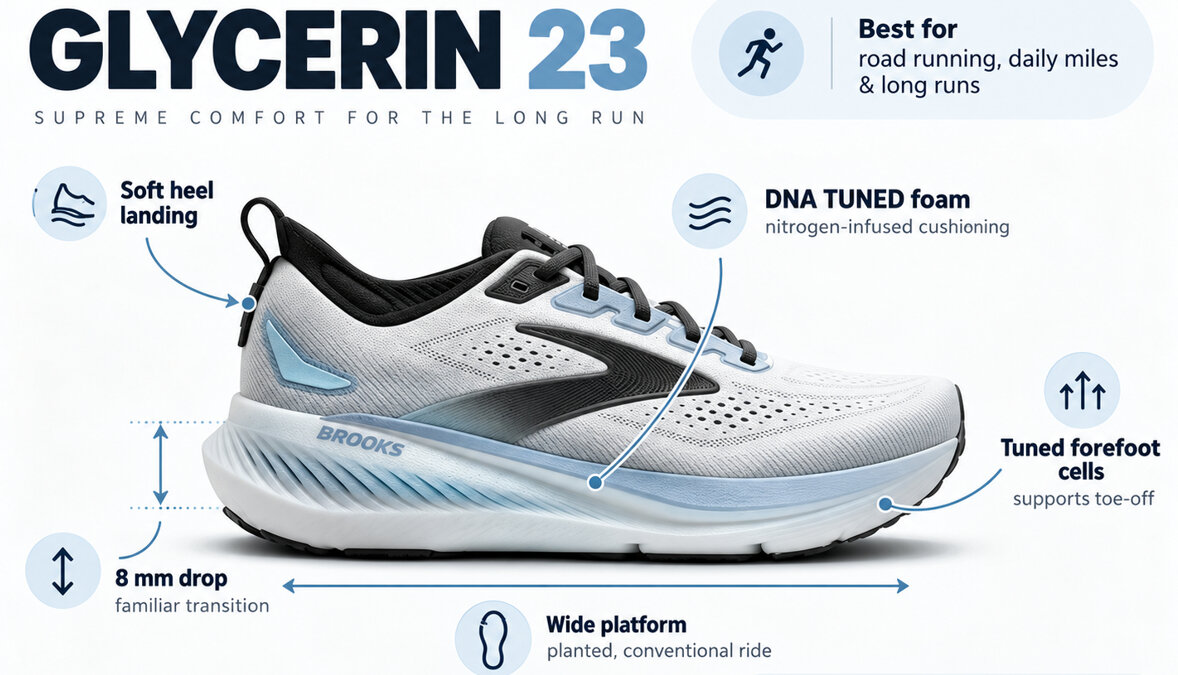
Glycerin 23 uses nitrogen-infused dual-cell DNA TUNED foam. The system cushions landings while smaller, tuned forefoot cells help support toe-off, and Brooks added another 2 mm of forefoot cushioning for extra comfort.
The result is controlled plush cushioning rather than an exaggerated rocker sensation. Its secure heel improves stability, while the wide platform supports smooth, stable transitions.
Hoka Bondi vs Brooks Glycerin for Daily, Long, and Recovery Runs
Bondi 9 favors recovery run shoes territory. Thick cushioning protects your legs during easy mileage, and the rocker reduces the need to manually push through every transition. Independent testing also found Bondi more protective and energetic than the current Glycerin.
Glycerin 23 favors normal everyday running. It is officially designed for road running, everyday miles, and long run shoes use, and its balanced geometry feels predictable when you move between relaxed and steady training.
Heel Drop and Rocker Geometry Change the Experience
Bondi 9 has an official 5 mm heel drop, compared with 8 mm in Glycerin 23. The lower drop changes lower-leg loading and works with Hoka’s rocker to create a forward-rolling sensation.
Glycerin’s higher drop creates more traditional geometry. If you are accustomed to conventional road running shoes, its heel-to-toe transition may feel more immediately familiar.
Lab measurements also show just how substantial both shoes are. Bondi 9 measured about 41.5 mm at the heel, while Glycerin 23 measured around 39.9 mm, confirming that Bondi provides the taller platform.
Stability, Weight, and Underfoot Protection
Despite its height, Bondi is not automatically unstable. Its broad footprint, Active Foot Frame, structured upper, and rearfoot-focused geometry give the neutral platform useful inherent stability.
Glycerin 23 also uses a wide platform, but its ride feels more planted and conventional. If you want additional guidance rather than neutral balanced support, the separate Glycerin GTS 23 adds GuideRails.
Weight barely separates the men’s versions. Bondi 9 weighs about 297 g/10.5 oz, while Glycerin 23 weighs 300.5 g/10.6 oz. So even though Bondi looks bulkier, the real weight difference is tiny.
Fit, Toe Box, and Wide Sizes
Bondi 9’s updated upper gives it a more accommodating fit than earlier Bondis. It comes in Regular, Wide, and Extra Wide, making it a strong wide running shoes option for runners who need more forefoot room.
Glycerin 23 also serves broad feet well.
Men’s versions come in Medium 1D, Wide 2E, and Extra Wide 4E, while the engineered knit stretches enough to accommodate natural foot movement.
Neither automatically has the better toe box. Your foot shape affects fit preference, and multiple widths accommodate broad feet far better than simply sizing up.
Walking, Standing, and Everyday Comfort
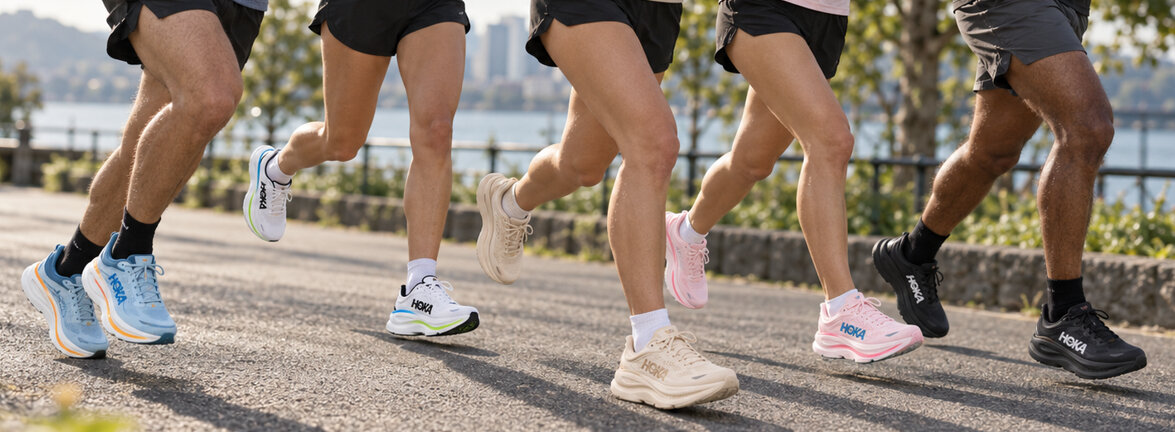
Bondi 9 has a clear advantage when your day includes lots of slow walking or standing. Hoka officially lists walking among its intended uses, and its tall cushioning supports all-day comfort while the rocker keeps each step moving forward.
This is also where Bondi’s thick cushioning protects tired legs especially well. If your priority is walking shoes rather than faster running, its combination of softness, stable geometry, and low-impact transitions is difficult to beat.
Glycerin remains excellent for walking comfort, especially if you dislike strong rocker geometry. Its secure heel, cushioned forefoot, higher drop, and more traditional movement can feel better during long walks for people who prefer a flatter sensation through the stride.
Outsole, Durability, and Value
Bondi 9 uses Durabrasion rubber over high-wear areas, which increases outsole durability without covering the entire bottom in heavy rubber. Its engineered mesh also contains 55% recycled polyester.
Glycerin 23 is built as a durable daily workhorse. Both models perform well for steady mileage, although Bondi emphasizes impact protection while Glycerin emphasizes consistent daily-training feel.
Price is almost identical. Bondi 9 is around $170, while Glycerin 23 is approx. $175, so the five-dollar difference should not determine your decision.
Pros and Cons
Hoka Bondi 9
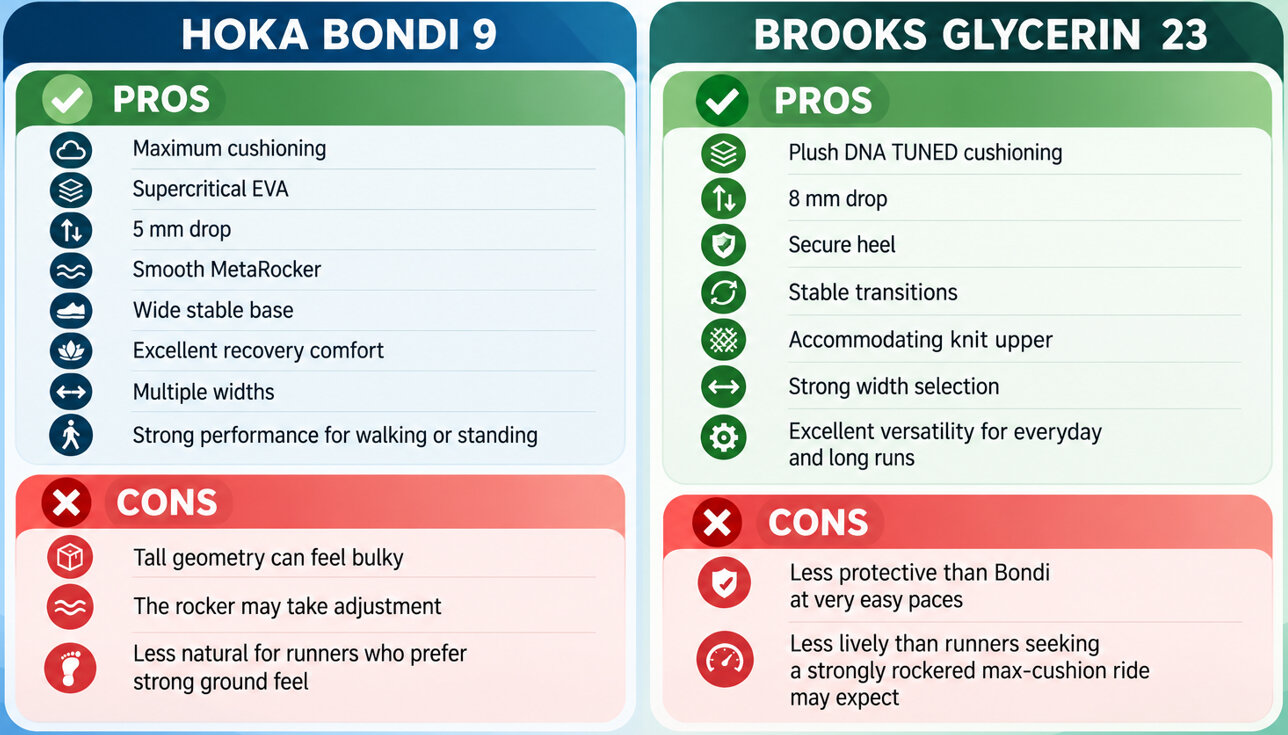
- Pros: maximum cushioning, supercritical EVA, 5 mm drop, Smooth MetaRocker, wide stable base, excellent recovery comfort, multiple widths, and strong performance for walking or standing.
- Cons: tall geometry can feel bulky, the rocker may take adjustment, and it is less natural for runners who prefer strong ground feel.
Brooks Glycerin 23
- Pros: plush DNA TUNED cushioning, 8 mm drop, secure heel, stable transitions, accommodating knit upper, strong width selection, and excellent versatility for everyday and long runs.
- Cons: less protective than Bondi at very easy paces and less lively than runners seeking a strongly rockered max-cushion ride may expect.
FAQ
1. Which is softer, Hoka Bondi or Brooks Glycerin?
Bondi 9 generally feels more protective and cushioned because of its taller supercritical EVA platform. Glycerin 23 is still plush, but its ride feels firmer and more traditional.
2. Which is better for long runs?
Both work for long distances. Choose Bondi for relaxed, protective long runs and recovery mileage. Choose Glycerin if you want cushioning with a more natural daily-training rhythm.
3. Which is better for wide feet?
Both are excellent choices. Bondi offers Regular, Wide, and Extra Wide, while Glycerin men’s sizing includes 1D, 2E, and 4E. Trying the correct width is more important than choosing one brand over the other.
4. Is Hoka Bondi more stable than Brooks Glycerin?
Both offer strong inherent stability despite being neutral shoes. Bondi relies on its wide base and Active Foot Frame, while Glycerin uses a broad platform, secure heel, and controlled transitions. Runners needing extra guidance can choose Glycerin GTS 23.
5. Which is better for walking and standing all day?
Bondi 9 gets the edge for long periods standing and relaxed walking because of its high cushioning and rocker. Glycerin is better if you want cushioned walking with a more conventional heel-to-toe movement.
Final Words
In Hoka Bondi vs Brooks Glycerin, choose Bondi 9 for maximum protection, recovery miles, and all-day comfort. Pick Glycerin 23 for plush cushioning with a more traditional, versatile daily-training ride. Your preferred drop, rocker feel, and foot shape should make the final decision.